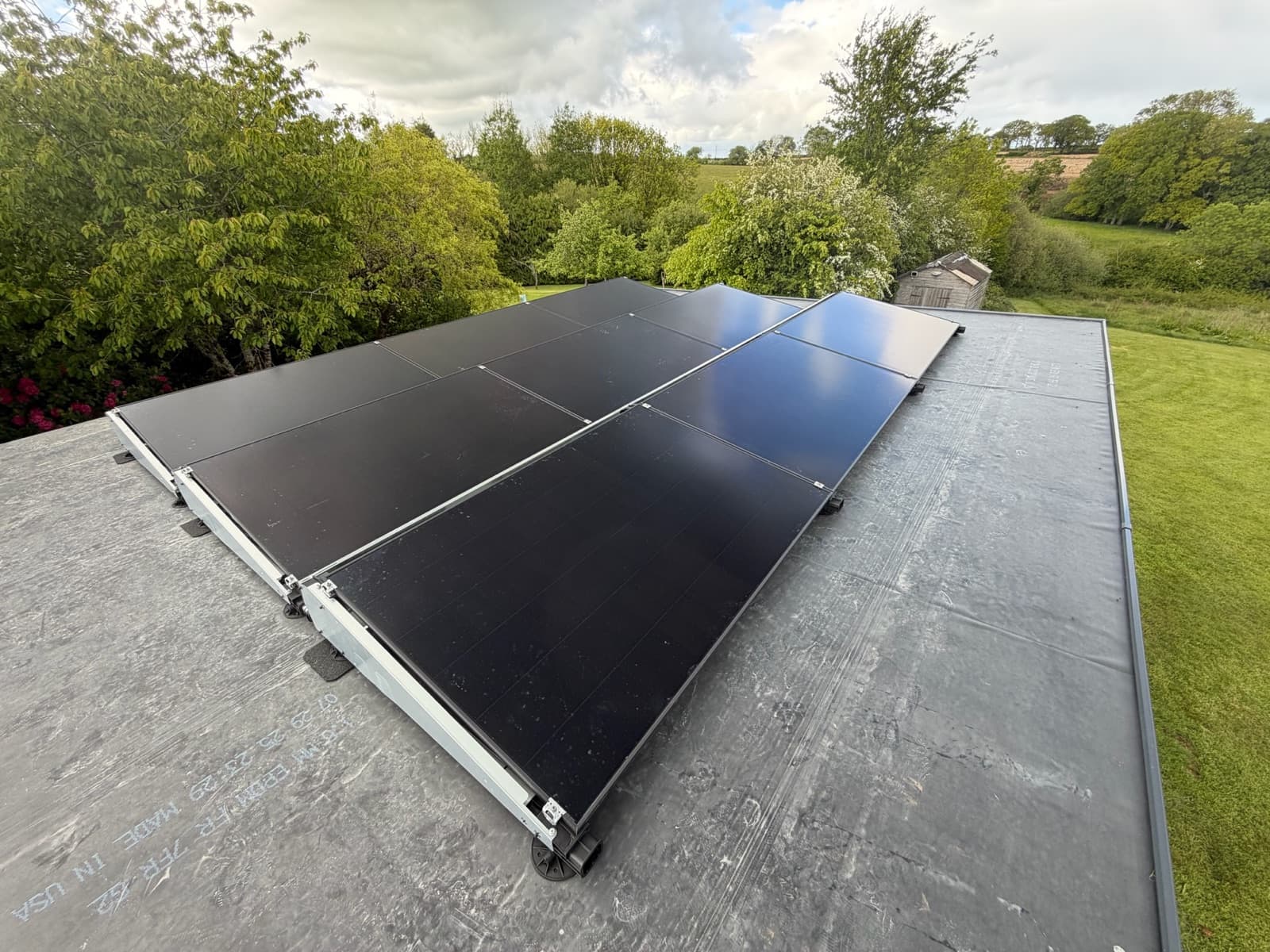
Your roof makes it at noon. You need it at seven.
Without storage, most of what a typical array generates goes back to the grid for 16p a unit — and comes back later at 28p. A battery is what closes that gap.
From under a third of it, to nearly two thirds.
On the MCS calculation behind our quotes, a house with panels and no battery uses about 30% of what it generates and exports the rest. Add 10.2kWh of storage and that rises to around 58%.
Nothing about the roof changed. The same panels, the same weather — you simply stopped selling your afternoon cheaply and buying your evening back expensively.
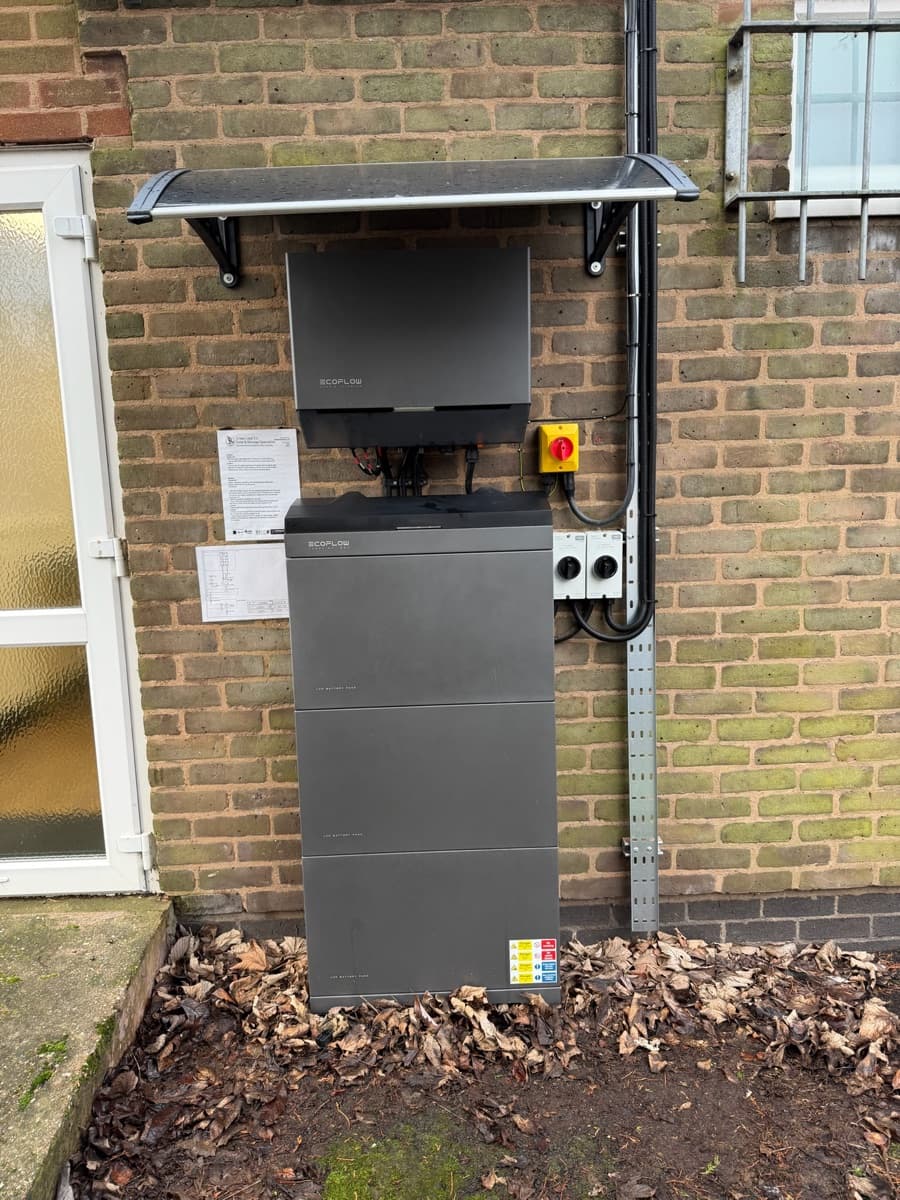
Four makes, chosen for the house rather than the deal.
EcoFlow PowerOcean
The unit on most of our quotes. 5.1kWh modules, so you start at 10.2kWh and add later, paired with a 6kW hybrid inverter. Fifteen-year warranty on both the battery and the inverter.
Sigenergy SigenStor
Stacks in 8.06kWh modules — 24kWh is three of them — and takes a backup gateway, so the house keeps running when the grid goes down. LiFePO4 cells, ten-year warranty.
Tesla Powerwall
Larger single unit with whole-home backup. We are a Tesla Powerwall Certified Installer, for the battery and the wall connector.
Fox ESS
Registered installer. A straightforward mid-range option where the budget is tighter.
Where it goes
Garage, utility, loft or an outside wall on a suitable bracket. It needs ventilation and a sensible cable route back to the consumer unit — the survey settles which wall.
How it goes
Free survey
The roof, the consumer unit, the cable route, and how you actually use electricity through the day.
Fixed quote
In writing, specified for your property. Not a penny more on the day. A 10% deposit books the date.
Installation
Cables concealed, site left clean. Most homes are a day or two on site.
Handover
Certification, the DNO paperwork and your monitoring app, all set up before we leave.
Storage, the common questions
Yes. Retrofit is common and often the single biggest improvement available to an existing array, particularly if the house is empty during the day. Whether it needs a new hybrid inverter or an AC-coupled battery alongside the existing one depends on what is already fitted.
Bigger is not automatically better — a battery you never fully cycle is money doing nothing. It is sized against your evening consumption and what the array actually generates. 10.2kWh is what we quote most often and covers most family homes; we go to 24kWh and beyond where there is a big roof, a heat pump or an electric car in the equation.
With the right unit and the right wiring, yes — backup starts automatically when the grid goes down. It has to be specified for it at the quote stage, so say if it matters to you. Solar without storage shuts off in an outage for safety.
It depends on the make. Sigenergy carry a ten-year warranty; the EcoFlow batteries and inverters we fit most often carry fifteen. Warranties are usually expressed as a throughput or a retained-capacity figure rather than a flat date. Like any lithium battery it holds less as it ages; it does not stop working at the end of the warranty. Our own workmanship warranty on the installation is five years.
Yes, and on the right tariff that changes the sums considerably — you can fill the battery overnight at the low rate and run the house off it during the expensive part of the day, whether or not the sun appears.
Find out what your roof would do.
A free survey, a fixed written quote, and no obligation to go ahead. Slots this week across Solihull and Birmingham.
- We call you back the same day
- Free survey — no obligation, no pushy sales
- Itemised quote in writing, fixed before we start